What are polyphenols?
Polyphenols are the natural compounds that make extra virgin olive oil taste bitter and peppery. They are also the reason olive oil gets treated, and studied, as a health food.
The short answer
Plants make polyphenols to defend themselves against sun, pests and disease. Olives make a lot of them, and when the fruit is crushed cold and quickly, some of those compounds end up in the oil rather than being washed away or refined out. More than thirty different phenolic compounds have been identified in extra virgin olive oil. Together they act as antioxidants, and they make up the specific part of olive oil that almost every health study measures.
What does mg/Kg mean?
Every polyphenol figure on this site is written the same way: milligrams of polyphenols in each kilogram of oil. This figure effectively represents the concentration of polyphenols in the oil.
A tablespoon holds about 14 g of oil. At 500 mg/Kg that is roughly 7 mg of polyphenols; at 1,000 mg/Kg, roughly 14 mg. What you actually take in each day depends on the polyphenol number on the bottle and how much oil you use.
- from 20 g of a 250 mg/Kg oil, the EU health claim minimum
- 5 mg
- from 2 tablespoons of a 500 mg/Kg oil
- ≈ 14 mg
- from 1 tablespoon of a 1,000 mg/Kg oil
- ≈ 14 mg
Some research has higher beneficial health effects from higher polyphenol oils, with a linear relationship. The trials behind the EU health claim compared oils at low, medium and high polyphenol levels and found the benefit to blood lipids rose in step with polyphenol content. Source The catch is that the strongest oil in those trials was under 400 mg/Kg. Oils at 1,000 mg/Kg and above have not yet been studied in the same way, so nobody can yet say whether the effect keeps climbing at the ultra high end.
Think of it as setting a dose
If you enjoy the taste of olive oil and use a lot of it — cooking, dressing, dipping bread — an oil in the 500 mg/Kg range is a great choice: enough to impart health effects, and mild enough to use freely. If you would rather drizzle smaller amounts, you could go higher, so you'll still receive a meaningful dose.
- mg/Kg for the EU health claim
- 250
- grams of oil a day to reach it
- 20
- phenolic compounds identified
- 30+
- tablespoons a day used in studies
- 2–4
Commission Regulation (EU) No 432/2012 permits the claim “olive oil polyphenols contribute to the protection of blood lipids from oxidative stress” only for oils providing at least 5 mg of hydroxytyrosol and its derivatives per 20g of oil. Source
What counts as high polyphenol?
High polyphenol is a marketing phrase, not a legal term, and nothing stops a producer using it. In practice 250 mg/Kg is the line that matters, because it is the level at which an oil qualifies for the EU health claim. Here is roughly how the shelf breaks down.
Refining strips the polyphenols out along with the flavour.
Legally extra virgin, but usually blended, older and mild.
Noticeably fruity and a little bitter. Still below the health claim.
Qualifies for the EU health claim. Distinctly bitter and peppery.
Early harvest, single cultivar, fresh. This is what we track.
Bars are illustrative, not to scale. Every oil on this site publishes its own third-party tested figure, so see the EVOO Score rankings for the full table.
Meet the main polyphenols
The polyphenol figure on a lab report is a total. It is the sum of dozens of compounds, and a handful of them do most of the work.
Oleocanthal
Responsible for the sting at the back of your throat. It was the subject of a well known 2005 study in Nature, which found it inhibits the same enzymes as ibuprofen.
Oleacein
Closely related to oleocanthal and largely responsible for the bitterness on your tongue. Heavily studied for its antioxidant activity.
Hydroxytyrosol
The compound the EU health claim is actually written around, and one of the more potent antioxidants found in food.
Oleuropein
The dominant polyphenol in the olive fruit itself. It breaks down over time into hydroxytyrosol, part of why fresher oil tends to test higher.
Tyrosol
Less potent than hydroxytyrosol but more stable, so it survives longer in the bottle. Named alongside hydroxytyrosol in the EU claim.
Tasting them
Pour a little into a glass, warm it in your hand and sip. Bitterness across the tongue and a peppery cough at the back of the throat are polyphenols at work.
What the research says
Olive oil polyphenols are one of the more heavily studied areas in nutrition. The honest summary is that the evidence is promising and still developing.
Blood lipids
The only claim formally authorised in the EU: olive oil polyphenols contribute to the protection of blood lipids from oxidative stress, at 5 mg of hydroxytyrosol and its derivatives per 20g of oil.
Regulation (EU) 432/2012Blood pressure
A review of trials found a modest but significant fall in systolic blood pressure after consumption of high polyphenol olive oil, compared with a low polyphenol oil.
Nutrients, 2020Inflammation
Oleocanthal has been shown to inhibit the COX-1 and COX-2 enzymes, the same targets as ibuprofen. This is the finding that first explained why good olive oil stings your throat.
Nature, 2005Antioxidant activity
Reviews of the wider literature cover antioxidant, anti-inflammatory and neuroprotective activity, much of it attributed to hydroxytyrosol and oleuropein derivatives.
Review, 2018This page is general information about food, not medical advice. Olive oil is not a treatment for any condition, so if you are managing one, speak to your GP.
Why some oils have ten times more
Six things decide whether a bottle lands at 80 mg/Kg or 800, and most of them are settled long before the oil reaches a shelf.
Harvest timing
Green, early harvest olives are packed with polyphenols. Leave them to ripen and you get far more oil per olive, but a fraction of the phenolic content. This is the biggest lever, and the most expensive one for the producer.
Cultivar
“cultivated variety” — Some olive varieties are simply richer than others. Coratina, Picual, Koroneiki and Moraiolo are the usual suspects at the top of the table. Blends are usually poor quality and tend to average out.
Milling
Crushing and malaxation temperature matter. Longer, warmer processing extracts more oil but degrades polyphenols, which is why serious producers mill cold and fast, often within hours of picking.
Age
Polyphenol content falls from the moment the oil is made. A 750 mg/Kg oil tested at bottling is not a 750 mg/Kg oil two years later. This effect depends a lot on storage conditions, and the best producers treat this seriously.
Storage
Light, heat and oxygen all break polyphenols down. Dark glass or tins, a cool cupboard and a properly sealed cap preserve what you paid for.
Filtration
Unfiltered oil keeps water and olive sediment in the bottle, which speeds up degradation. Filtered oil holds its numbers for longer, which is why we reward it in our EVOO Score rating system.
How to check a claim is real
- A published lab report. From a reputable third-party labratory.
- An IOC recognised method. HPLC is the approved method for measuring phenolic content, and NMR is a newer alternative.
- A harvest date, not just a best before. Polyphenols fall over time, so publishing the date the olives were picked tells is a nod to quality.
- Dark glass or tin. Clear bottles let light in, and light degrades the exact compounds you are paying for.
- Filtered, and honest about it. Unfiltered oil looks artisanal but degrades faster in the bottle.
Every one of these feeds into our EVOO Score rating system, which is a fairer way to compare oils than polyphenol count alone. If you would rather more straightforward help when deciding what to buy, the recommendation quiz takes about a minute.
Polyphenol FAQs
Polyphenols are natural antioxidant compounds made by plants, and in extra virgin olive oil they are what create the bitter, peppery taste and drive most of the health research.
There is no legal definition of the phrase, but 250 mg/Kg is the practical dividing line, because that is the level at which an oil delivers the 5 mg of hydroxytyrosol per 20g needed for the EU health claim.
Yes. Bitterness on the tongue and a peppery catch at the back of the throat are direct sensory signals of phenolic content. An oil sold as high polyphenol that tastes smooth with no peppery after-taste is a red flag.
Heat reduces them, and the higher and longer the heat the greater the loss. Extra virgin olive oil is stable enough to cook with, but if you are buying an oil specifically for its polyphenol count, use it raw over salad, vegetables, soup or bread, and keep a cheaper oil for the pan.
They decline steadily rather than expiring on a date. Buy oil from the most recent harvest year, store it away from light and heat, and use it within a few weeks of opening if you can.
Not necessarily. Very high polyphenol oils are intensely bitter and peppery, and some people find them hard to take neat. Polyphenol count is also only one measure of quality: acidity, peroxide value, freshness and filtration all matter, which is why we score oils on all of them.
The highest scoring oils right now
Ordered by our EVOO Score rating system, which weighs polyphenol content alongside acidity, peroxide value, harvest year, lab testing and more.
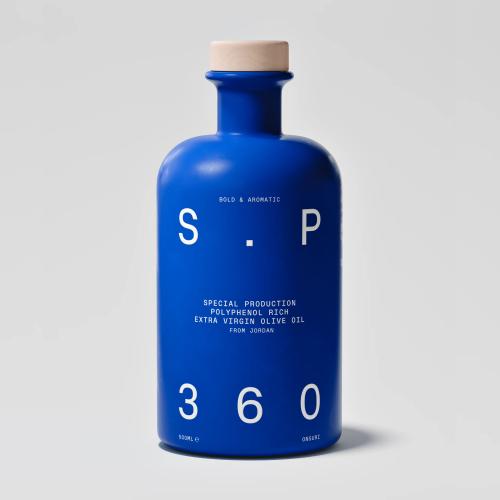
SP360
SP360 is a product that has been built from the ground up with health and polyphenols in mind. From the well known producer ONSURI, the bottle is lifetime refillable—so you only have to buy it once—it can then be refilled with pouches that fit through your letterbox. The striking powder-coated sky blue bottle can be displayed on a countertop without risking damage to the oil. All orders come with a free pourer so you can drizzle precisely.
Read more
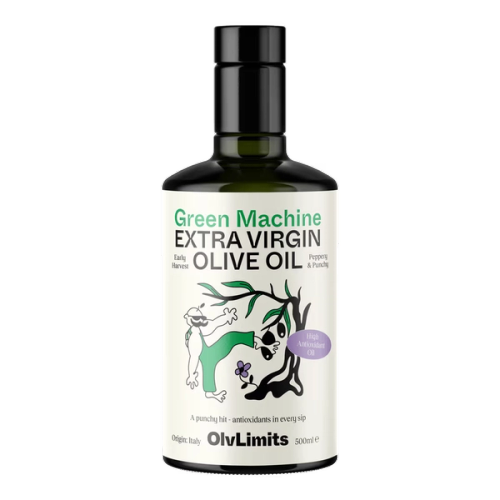
OlvLimits Green Machine
OlvLimits is taking a modern, and refreshingly transparent stance on olive oil. Offering a variety of oils to cater for your everyday and cooking use. Notably, they offer a unique 2L bag-in-tube to keep you stocked up for longer, and at a lower cost.
Read more
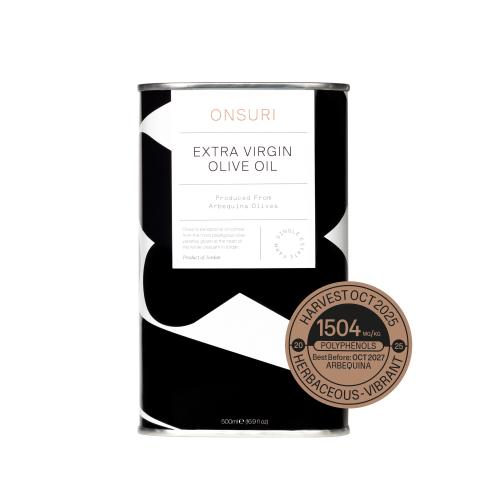
ONSURI Arbequina
ONSURI have achieved record levels of polyphenols in their latest (25/26) Arbequina harvest. Reaching a level of 1504.42 mg/Kg, you'll only need a single tablespoon to provide a huge dose of daily polyphenols.
Read more
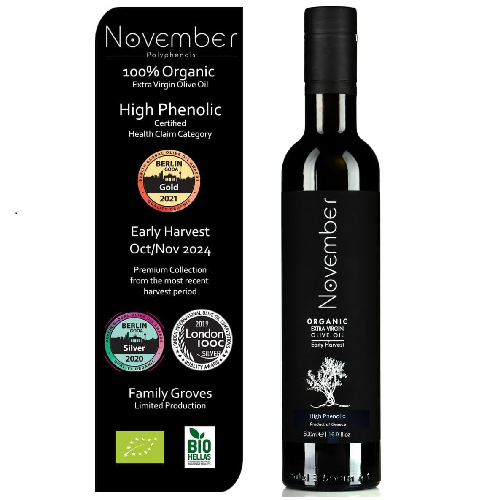
November
Early harvest November olive oil was hand-picked from the trees when the olives were still unripe and green, giving the olive oil it's high polyphenol count and classic peppery notes. 100% Organic and filtered to maximise shelf-life.
Read more
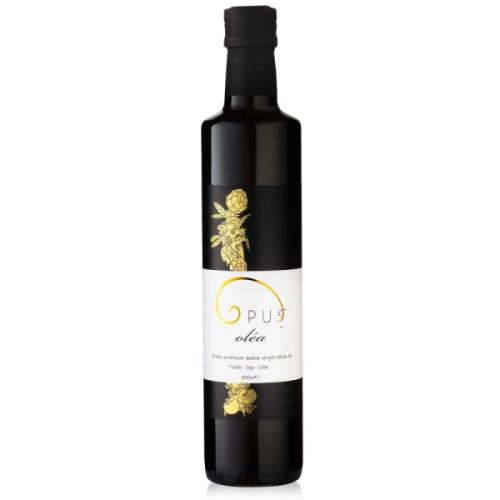
Opus Oléa
New 25/26 season Opus Oléa. This is a high polyphenol oil harvested in southern Greece and dispatched by Opus Live Well in London. Notably low acidity score which is a great sign of a quality olive oil, extracted hours from harvest by a small, family producer.
Read more
mg/Kg — milligrams of polyphenols per kilogram of olive oil. See all oils.
Confused about which oil to get?
Take our quick quiz to get a personalised high polyphenol olive oil recommendation.
Take the quizSubscribe to our newsletter
Be the first to know when new high polyphenol olive oils land in the UK.
Subscribe